Why the 40–60% humidity band decides humidifier sales
Indoor comfort sits inside a narrow band. Matching mist output, tank ergonomics and regional compliance to the target room cuts returns and builds repeat demand.
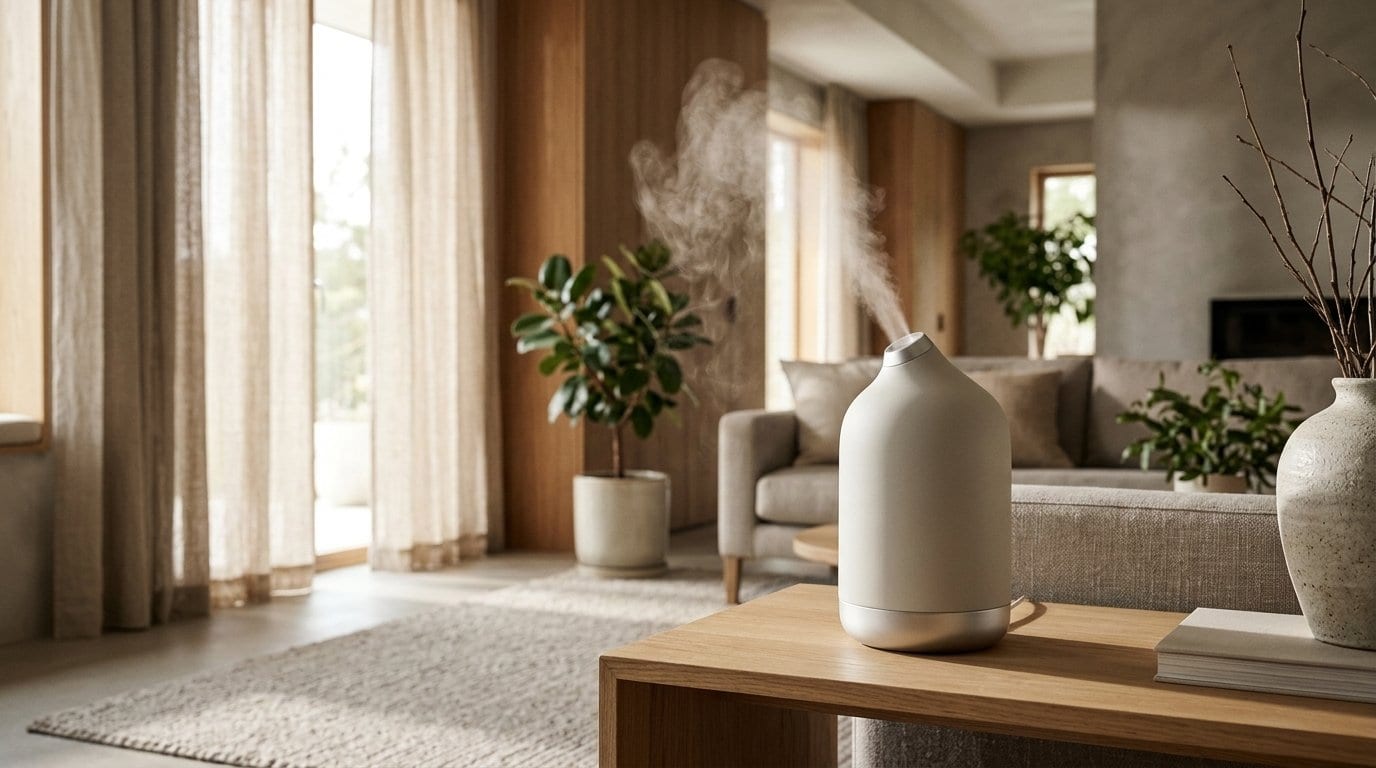
Indoor humidity management matters in the heating season and in heavily air-conditioned rooms alike. Building and indoor-air guidance generally points to roughly 40% to 60% relative humidity as a practical comfort range for living and working spaces.
Below that range, dry skin, static build-up and throat irritation become common; above it, and without control, condensation forms on glass and damp surfaces, which is where mould and extra maintenance start.
In B2B selection, buyers usually compare ultrasonic against evaporative or warm-mist concepts by target market and price tier. Ultrasonic units offer a compact footprint, quiet operation and flexible styling for bedrooms, desks and travel, while larger-capacity or humidity-aware designs suit wider living spaces.
Whatever the mist technology, everyday usability decides whether a product stays on the nightstand or ends up in a cupboard: wide-opening tanks that are easy to rinse, clear water-level visibility, leak-resistant seals and smooth mist dispersion all feed directly into customer satisfaction and review scores.
Regional electrical standards and safety certification also belong in the early development plan. Voltage ratings, plug types, the reliability of water-shortage shut-off and documentation requirements differ by market, and matching the specification to the destination before mass production avoids costly rework and customs delays.